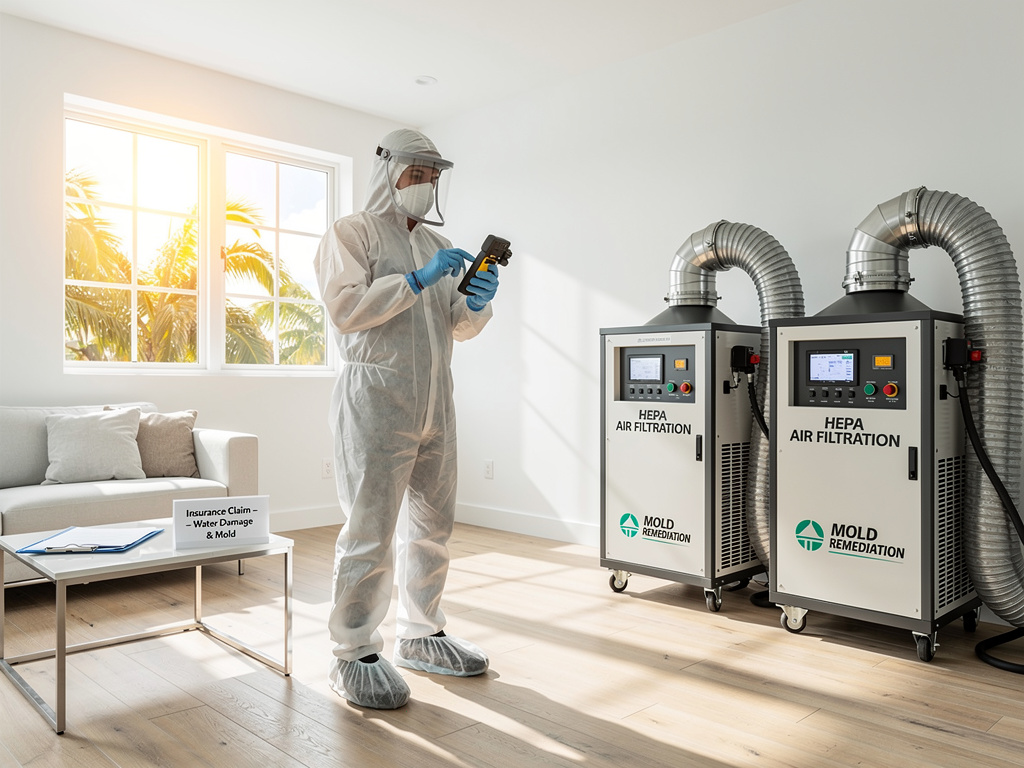
Insurance Claims for Water-Damage Mold in Miami Homes
Miami’s tropical climate and frequent heavy rains make water damage and mold growth a constant threat for homeowners. Our team at Miami Mold Remediation Pros has seen firsthand how insurance claims related to water-damage mold can become complicated. Miami-Dade neighborhoods such as Little Havana and Coral Gables often experience these challenges, with strict insurance policies reflecting the high frequency of mold claims. Understanding how to properly document and file your insurance claim for water-damage mold is crucial to getting the compensation you deserve. In this comprehensive guide, we’ll walk you through the differences between covered sudden water damage versus non-covered gradual seepage, what insurance adjusters look for, and how to navigate Florida’s challenging insurance market to protect your home.
Insurance claims for water damage mold in Miami require thorough documentation including photos, moisture readings, and professional assessments. Miami insurance companies cover sudden, accidental water damage but exclude gradual seepage, so promptly reporting and documenting the damage is essential. Hiring a public adjuster can improve claim success given the strict scrutiny in Miami’s market.
Understanding Miami’s Insurance Landscape for Mold Claims
Miami’s unique climate and real estate market have contributed to a particularly strict insurance environment when it comes to mold claims. Florida’s insurance market crisis has led many companies to tighten their policies and underwriting standards, especially in Miami-Dade County. Insurance providers are wary of the high frequency of mold claims originating from water damage, which has resulted in increased scrutiny and, at times, claim denials.
Insurance companies differentiate between sudden and accidental water damage events, which are typically covered, and gradual water seepage or neglect, which are often excluded. This distinction is crucial because a leaking pipe that bursts causing immediate flooding is usually covered, whereas slow leaks behind walls that go unnoticed for months generally are not. Miami neighborhoods like Little Havana and Coral Gables have many older homes where gradual seepage can be a common issue, making it essential for homeowners to act quickly once damage is detected.
Our team’s experience with over 800 Miami mold remediation cases shows that understanding your policy’s fine print and documenting the damage promptly are key to navigating this challenging insurance landscape.
How to Document Water-Damage Mold for Your Insurance Claim
Proper documentation is the foundation of a successful insurance claim for water-damage mold in Miami. Insurance adjusters look for clear evidence that the damage was sudden, accidental, and not the result of neglect. Here’s what you need to prepare:
- Photographic Evidence: Take clear, dated photos of all affected areas, including visible mold, water stains, damaged belongings, and the source of water intrusion if identifiable.
- Moisture Readings: Using a moisture meter or hiring a professional to conduct moisture testing helps quantify the extent of water saturation behind walls, floors, and ceilings.
- Professional Assessment: A licensed mold inspector or remediation specialist can provide a detailed report outlining the cause of mold growth, the affected areas, and recommended remediation steps. We recommend our mold inspection services for this purpose.
- Timeline Documentation: Keep a record of when you first noticed the damage and any steps taken to mitigate it. This timeline is vital in demonstrating prompt action and ruling out long-term neglect.
By compiling this evidence, you present a strong case to your insurance adjuster and speed up the claim process.
What Insurance Adjusters Look for in Miami Mold Claims
Adjusters assigned to Miami water damage mold claims are trained to identify signs of covered versus non-covered damage. Their primary focus is determining whether the damage was sudden and accidental or gradual and due to homeowner neglect. Here’s what they typically examine:
- Source of Water Damage: Adjusters verify if the water intrusion was from a covered peril such as a burst pipe, storm damage, or accidental overflow.
- Extent and Age of Damage: They assess how long the water has been present. Long-term leaks or seepage that cause mold often lead to claim denial.
- Maintenance and Mitigation Efforts: Adjusters review homeowner actions to mitigate damage once discovered, including timely repairs and mold remediation efforts.
- Documentation Completeness: A well-documented claim with professional reports, photos, and moisture readings strengthens the homeowner’s position.
Given Miami’s high claim frequency, insurance companies are particularly cautious. Having professional support during the claims process can make a significant difference in outcome.
Hiring a Public Adjuster vs Filing Alone in Miami
Deciding whether to file your insurance claim alone or hire a public adjuster is an important consideration. Public adjusters specialize in representing policyholders and negotiating with insurance companies to maximize claim payouts. Here’s why Miami homeowners, especially in areas like Coral Gables and Little Havana, may benefit from their services:
- Expertise: Public adjusters understand the nuances of Miami’s insurance policies and what documentation is needed.
- Time Savings: Filing claims alone can be time-consuming and stressful; a public adjuster handles communication and paperwork.
- Higher Settlements: Our team’s experience shows that claims involving public adjusters often result in higher settlements due to better documentation and negotiation.
- Stress Reduction: Handling mold claims can be overwhelming, but public adjusters act as advocates, reducing homeowner stress.
While hiring a public adjuster involves a fee, the potential increase in claim payout and peace of mind often justify the cost.
Typical Timeline for Water-Damage Mold Claims in Miami-Dade County
The timeline from filing a water-damage mold insurance claim to receiving a payout in Miami-Dade County generally follows these stages:
- Immediate Action (Day 1-3): Document damage, mitigate water intrusion if possible, and notify your insurance company promptly.
- Inspection and Assessment (Week 1-2): An adjuster visits your property to assess damage, review documentation, and may request a professional mold inspection.
- Claim Review (Week 2-4): Insurance company evaluates the claim, verifying coverage terms, and determining whether damage is covered or excluded.
- Negotiation and Approval (Week 4-6): If needed, negotiations occur, especially if a public adjuster is involved. Approval for remediation and payout is granted.
- Payout and Remediation (Week 6+): Funds are disbursed, and mold remediation can begin promptly to prevent further damage.
Delays can occur, especially with complex mold claims, but thorough documentation and professional assessments usually speed up the process. Our Miami Mold Remediation Pros team is available to support you throughout this timeline to ensure effective communication with your insurer.
Frequently Asked Questions
Contact Miami Mold Remediation Pros
If your Miami home is suffering from water-damage mold, call Miami Mold Remediation Pros today at (645) 241-5434 for expert guidance and remediation services. Our experienced team is ready to help you document your claim and restore your property quickly.
Miami Mold Remediation Pros
📍 4300 Biscayne Blvd STE 203, Miami FL
📞 (645) 241-5434
🌐 https://miamimoldremediation.us