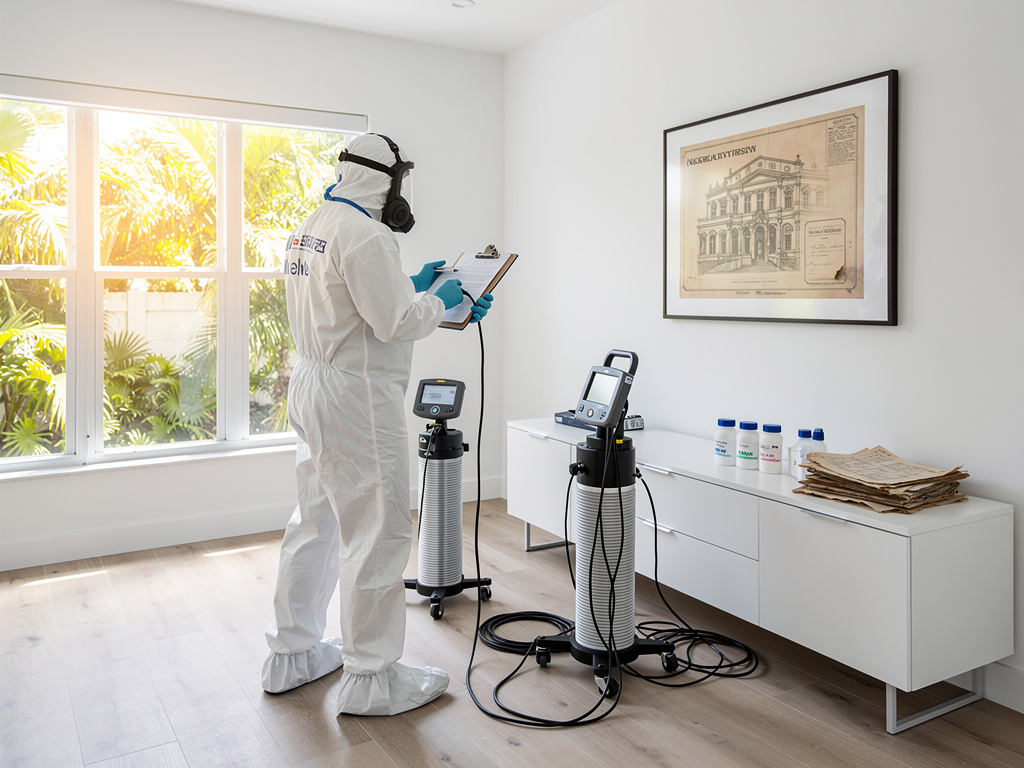
Black Mold Risks in Miami’s Historic Buildings
Miami’s historic neighborhoods like Coral Gables, Miami Beach, Coconut Grove, and Little Havana are rich in architectural charm and heritage. However, these beautiful historic buildings come with unique challenges—especially when it comes to black mold hazards. The original construction materials and methods, such as plaster walls, cast iron plumbing, and jalousie windows, interact with Miami’s humid subtropical climate in ways that increase the risk of dangerous black mold growth. Our team at Miami Mold Remediation Pros has seen firsthand how preserving these historic homes while combating mold requires specialized knowledge and care. Understanding the specific black mold risks in Miami’s historic buildings is essential for homeowners and preservationists who want to maintain their property’s integrity and safety without violating historic preservation rules.
Black mold risks in Miami historic buildings stem from moisture retention in original plaster walls, corroding cast iron plumbing, and humidity infiltration through original jalousie windows. Remediation must balance thorough mold removal with strict adherence to preservation guidelines, especially in protected districts like Coral Gables and Miami Beach. Our team customizes solutions that protect both health and heritage.
Unique Construction Materials and Their Mold Vulnerability
One of the primary challenges in addressing black mold risks in Miami historic buildings is the nature of original construction materials. Many historic homes in Coral Gables feature Mediterranean Revival style plaster walls that differ significantly from modern drywall. These plaster walls are denser and more porous, which means they can hold moisture for extended periods once exposed to leaks or high humidity. Unlike drywall, plaster does not dry quickly, creating an ideal environment for black mold spores to colonize and grow.
Similarly, in neighborhoods like Coconut Grove, Victorian cottages often have original wood framing and plaster combined with older insulation methods that were not designed to withstand Miami’s persistent humidity. This combination encourages hidden mold growth behind walls and under floors, where moisture intrusion is harder to detect and remediate.
Historic preservation standards frequently prohibit replacing plaster walls with modern materials, which means remediation must focus on drying, sealing, and treating the existing plaster rather than demolition. Our team’s experience with over 800 local mold cases helps us navigate these constraints while effectively eliminating mold. We use specialized drying equipment, antimicrobial treatments, and sealants compatible with historic plaster to control mold without damaging the structure.
Corroding Cast Iron Plumbing and Mold Seepage
Many historic buildings in Miami, particularly those built before the 1960s such as 1950s concrete block homes in Little Havana, feature cast iron plumbing systems. Over decades, these pipes corrode and develop leaks that often go unnoticed behind walls or under floors. When cast iron plumbing seeps water, it creates a persistent moisture source that feeds black mold growth.
Unlike modern PVC plumbing, cast iron is heavy and integral to the original structure, which complicates replacement efforts—especially under historic preservation rules. Removing or replacing plumbing can require permits and approvals, and improper work risks damaging the home’s historic fabric.
Our team has encountered numerous Coral Gables homes where corroding cast iron led to hidden mold colonies that affected indoor air quality and posed health risks to occupants. We approach these situations by first conducting detailed mold and moisture inspections, including infrared scanning and moisture mapping, to locate leaks precisely. Then we coordinate with licensed plumbers experienced in historic properties to repair or line the pipes without full replacement whenever possible.
Crucially, we integrate mold remediation with plumbing repairs to prevent recontamination. After leak control, we thoroughly dry affected areas and apply mold inhibitors to plaster and wood surfaces, ensuring long-term protection while respecting historic preservation guidelines.
Humidity Infiltration Through Original Jalousie Windows
Original jalousie windows are a signature feature in many Miami historic homes, including those in Miami Beach’s Art Deco district and Coconut Grove Victorian cottages. These windows consist of horizontal glass slats that open and close like shutters but often have gaps that allow outdoor air, dust, and humidity to enter even when closed tightly.
Miami’s subtropical climate, characterized by high humidity year-round, means that moisture-laden air easily penetrates interior spaces through these windows. This constant influx of humidity raises indoor moisture levels, promoting black mold growth on walls, ceilings, and window frames, especially in rooms with poor ventilation.
Replacing original jalousie windows is usually prohibited under historic preservation rules, which prioritize maintaining architectural authenticity. Our team’s experience shows that remediation efforts must focus on managing indoor humidity and sealing around windows without removing or altering the jalousies.
We recommend using weather stripping designed for historic window types and installing discreet ventilation systems to improve air circulation. Dehumidifiers are often deployed strategically to reduce ambient moisture, and mold treatments are applied to surfaces showing early signs of mold. These measures help mitigate black mold risks while preserving the aesthetic and historic value of the windows.
Navigating Historic Preservation Rules During Mold Remediation
Historic preservation rules in Miami’s protected districts such as Coral Gables and Miami Beach impose strict limits on modifications to building exteriors, interiors, and materials. These regulations aim to retain architectural integrity but can complicate typical mold remediation strategies that rely on removing and replacing damaged materials.
For example, removing plaster walls or replacing original wood trim to eliminate mold may not be permissible without extensive approvals. Even cleaning methods must be carefully selected to avoid damaging historic finishes or surfaces. Our team understands the importance of collaborating with preservation boards and building owners to develop remediation plans that comply with local ordinances.
We often engage in detailed documentation, including photos, moisture readings, and treatment plans, to secure necessary permits. Our approach prioritizes minimally invasive techniques such as localized cleaning, antimicrobial coatings compatible with historic materials, and drying methods that do not require demolition.
In Coral Gables homes listed on the National Register of Historic Places, we have successfully balanced mold remediation with preservation by using reversible treatments and preserving original fabric wherever possible. This experience is crucial for homeowners who want to protect both their health and their home’s historic significance.
Our Experience with Black Mold in Miami’s Historic Districts
Our team has developed deep expertise in addressing the black mold risks unique to historic buildings in neighborhoods like Coral Gables and Miami Beach. In Coral Gables Mediterranean Revival homes, we frequently encounter mold behind plaster walls caused by cast iron plumbing leaks combined with high humidity infiltration through original jalousie windows.
Our remediation process begins with comprehensive mold inspections using advanced moisture detection technology. We then formulate tailored remediation plans that respect historic preservation requirements. This often involves repairing plumbing leaks discreetly, controlling indoor humidity with non-invasive equipment, and applying mold treatments that do not alter the appearance or integrity of historic materials.
In Miami Beach’s Art Deco buildings, we also address mold related to flat roofs and terrazzo floors that retain moisture. We coordinate closely with building managers and preservationists to ensure our work aligns with community standards and maintains the district’s unique aesthetic.
For homeowners in Coconut Grove and Little Havana, our approach similarly balances effective mold removal with the preservation of original architectural features. We recommend regular mold inspections and preventive moisture control measures to mitigate black mold risks before they become severe.
If you own a historic home in Miami, our team’s specialized skills and local knowledge can help you protect your property from black mold while preserving its historic character. Learn more about our mold remediation services at Miami Mold Remediation Pros.
Frequently Asked Questions
Contact Miami Mold Remediation Pros
If you suspect black mold in your historic Miami home, call Miami Mold Remediation Pros at (645) 241-5434 for expert assessment and safe remediation. Our experienced team understands the unique challenges of preserving your property while eliminating mold hazards.
Miami Mold Remediation Pros
📍 4300 Biscayne Blvd STE 203, Miami FL
📞 (645) 241-5434
🌐 https://miamimoldremediation.us