Post-Hurricane Mold Growth Patterns and Mitigation in Miami
After every hurricane that barrels through Miami, our city faces a unique and urgent challenge: controlling post-hurricane mold growth. Miami’s tropical climate, characterized by persistently high humidity even after storms, creates a perfect breeding ground for mold to flourish rapidly. In neighborhoods like Coral Gables and South Miami, where historic homes and lush landscaping abound, the risk of mold infestations after flooding or water intrusion is exceptionally high. Our team at Miami Mold Remediation Pros has managed over 800 post-storm mold cases, witnessing firsthand how quickly mold can take hold—often within 48 to 72 hours of water exposure. Immediate and specialized mitigation efforts are critical to protect property, health, and insurance claims. This comprehensive guide explores the patterns of mold growth after hurricanes, the challenges posed by Miami’s environment, and proven strategies for effective mold remediation and prevention.
Post-hurricane mold growth in Miami explodes within 48-72 hours due to high humidity, requiring professional dehumidification and HEPA air scrubbing for effective mitigation. Standard fans are insufficient; immediate action and documentation are essential to prevent long-term damage and support insurance claims.
Understanding Post-Hurricane Mold Growth in Miami’s Tropical Climate
Miami’s climate is characterized by year-round high humidity, often exceeding 70%, which remains elevated even after hurricanes. This persistent moisture creates ideal conditions for mold spores to activate and colonize surfaces quickly after water intrusion events. When hurricanes strike, flooding or leaks bring Category 1 (clean water), Category 2 (gray water), or Category 3 (black water) contamination into homes and buildings, each representing increasing levels of mold risk and health hazard.
Within the crucial 48-72 hour window post-storm, mold spores settle on damp materials like drywall, wood, and carpet backing, germinating and expanding rapidly. Unlike drier climates where natural evaporation may slow mold development, Miami’s ambient humidity prevents drying, accelerating mold growth and complicating remediation efforts. This means that homeowners and property managers must act swiftly and decisively to stop mold from establishing and spreading.
Our team’s experience in diverse Miami neighborhoods, including Coral Gables and South Miami, highlights that the type of water contamination greatly influences mold risk. Category 1 water damage may pose less immediate health risks but still promotes aggressive mold growth if untreated. Categories 2 and 3 water contain organic matter and pathogens that not only increase mold proliferation but also require specialized remediation protocols to ensure occupant safety.
Why Standard Drying Fans Fail in Miami’s Post-Storm Environment
One of the most common misconceptions after hurricane flooding in Miami is that running standard drying fans is sufficient to prevent mold growth. However, our extensive fieldwork proves that these fans are largely ineffective due to Miami’s high ambient humidity.
- Humidity Levels Remain Elevated: Fans circulate moist air rather than removing moisture. With Miami’s ambient humidity often hovering above 70%, fans merely redistribute moisture without drying surfaces effectively.
- Lack of Moisture Extraction: Unlike professional dehumidifiers, standard fans do not extract water vapor from the air. This means that humidity remains trapped indoors, creating a perfect environment for mold spores to thrive.
- Extended Drying Times: Without proper dehumidification, materials like sheetrock and wood stay damp for weeks, greatly increasing the risk of mold growth and structural damage.
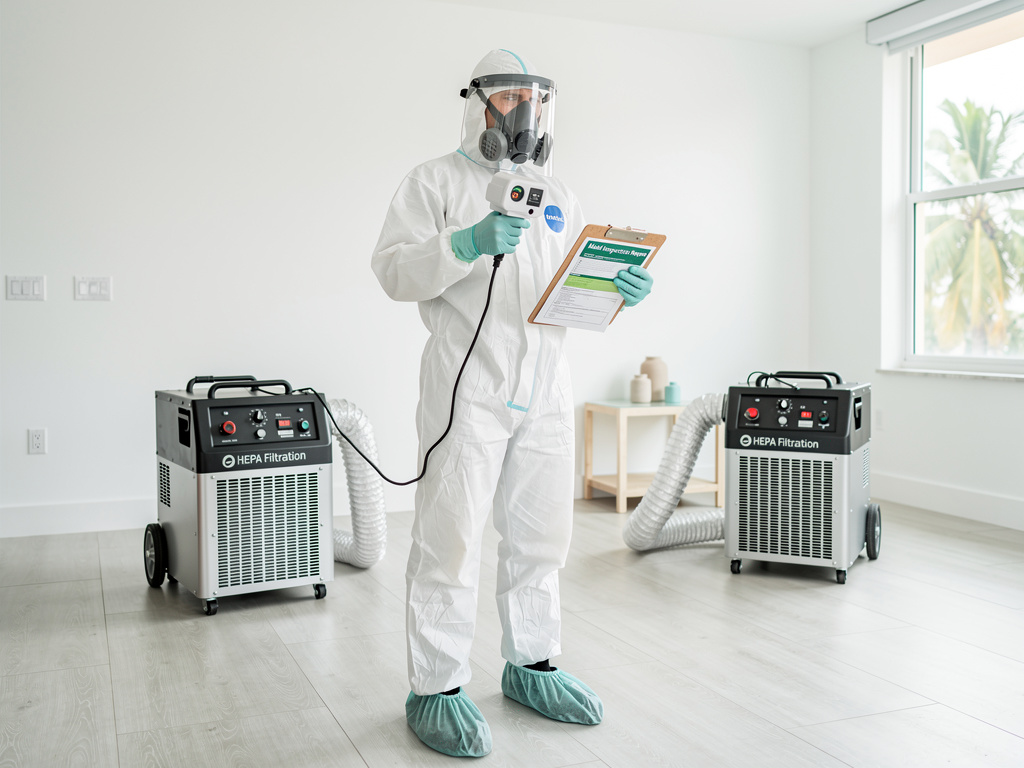
Our professional approach always includes industrial-grade dehumidifiers designed to reduce indoor humidity below 50%, a level that inhibits mold growth. Combined with HEPA air scrubbers that filter airborne mold spores, these tools are essential for rapid and effective remediation. Attempting to dry a Miami home post-hurricane with only fans is not only ineffective but can lead to costly mold infestations requiring extensive remediation.
Professional Dehumidification and HEPA Air Scrubbing: Miami Mold Remediation Essentials
After floodwaters recede, the key to controlling post-hurricane mold growth in Miami is rapid moisture removal paired with air quality management. Our team deploys commercial-grade dehumidifiers to extract excess moisture from the air and building materials, achieving humidity levels that standard household devices cannot match.
- Industrial Dehumidifiers: These units can remove hundreds of pints of water daily, creating a controlled drying environment even amidst Miami’s naturally humid climate.
- HEPA Air Scrubbers: Airborne mold spores are a major threat post-storm. HEPA filters capture these microscopic particles, improving air quality and preventing cross-contamination to unaffected areas.
- Continuous Monitoring: Our professionals use moisture meters and hygrometers to monitor drying progress, ensuring that all affected materials reach safe moisture levels before project completion.
- Documentation for Insurance: Detailed reports, photographs, and moisture readings are compiled to document the mold remediation process. This evidence is crucial for insurance claims, especially in hurricane-prone Miami neighborhoods like Coral Gables and South Miami where storm damage is common.
By integrating these technologies and meticulous documentation, we help property owners recover faster and reduce the risk of mold-related health problems and structural damage after hurricanes.
Typical Mold Growth Timeline After Hurricanes in Miami Neighborhoods
Understanding the timeline of mold growth after a hurricane helps property owners in Miami plan timely interventions. Based on our experience with over 800 Miami post-storm cases, here’s what we typically observe in areas such as Coral Gables and South Miami:
- Day 1-2: Floodwaters recede; waterlogged materials begin to absorb moisture. Mold spores are present but not yet visible. Immediate assessment and water extraction are critical.
- Day 3: Mold colonies start to develop on porous materials like drywall and carpet. Initial musty odors may emerge. Without intervention, mold growth accelerates.
- Day 7: Visible mold patches appear on walls and ceilings. The infestation may spread to hidden cavities and HVAC systems, increasing health risks.
- Day 14 and Beyond: Mold is well-established, often requiring extensive remediation or material removal. Secondary damage such as wood rot and structural weakening may occur.
This timeline demonstrates the narrow window for effective mold mitigation in Miami’s humid environment. Acting within the first 48-72 hours with professional drying and air filtration can prevent costly damage and health hazards.
Navigating Water Contamination Categories and Mold Risk Levels After Hurricanes
Water contamination levels after a hurricane dictate the complexity and urgency of mold remediation in Miami homes and businesses. Our team is trained to identify and manage these categories to protect occupants and limit damage.
- Category 1 — Clean Water: Originates from rain or broken water supply lines. While appearing less hazardous, Category 1 water can become a mold risk if not promptly removed due to Miami’s humidity.
- Category 2 — Gray Water: Contains contaminants from appliances or toilets (without feces). Gray water increases mold risks and requires specialized cleaning and drying protocols.
- Category 3 — Black Water: Highly contaminated with sewage or floodwaters. This category poses serious health hazards and mandates full protective gear, material removal, and thorough disinfection.
The higher the contamination category, the greater the mold risk and remediation complexity. Our expertise in Miami neighborhoods like Coral Gables and South Miami ensures that we tailor our remediation approach to the contamination level and environmental conditions. For thorough assessments and mold inspections following hurricanes, visit our mold inspection services page.
Frequently Asked Questions
Contact Miami Mold Remediation Pros
If your Miami property is at risk of post-hurricane mold growth, contact our expert team today at (645) 241-5434 for prompt, professional remediation. Protect your home and health with Miami’s trusted mold specialists.
Miami Mold Remediation Pros
📍 4300 Biscayne Blvd STE 203, Miami FL
📞 (645) 241-5434
🌐 https://miamimoldremediation.us